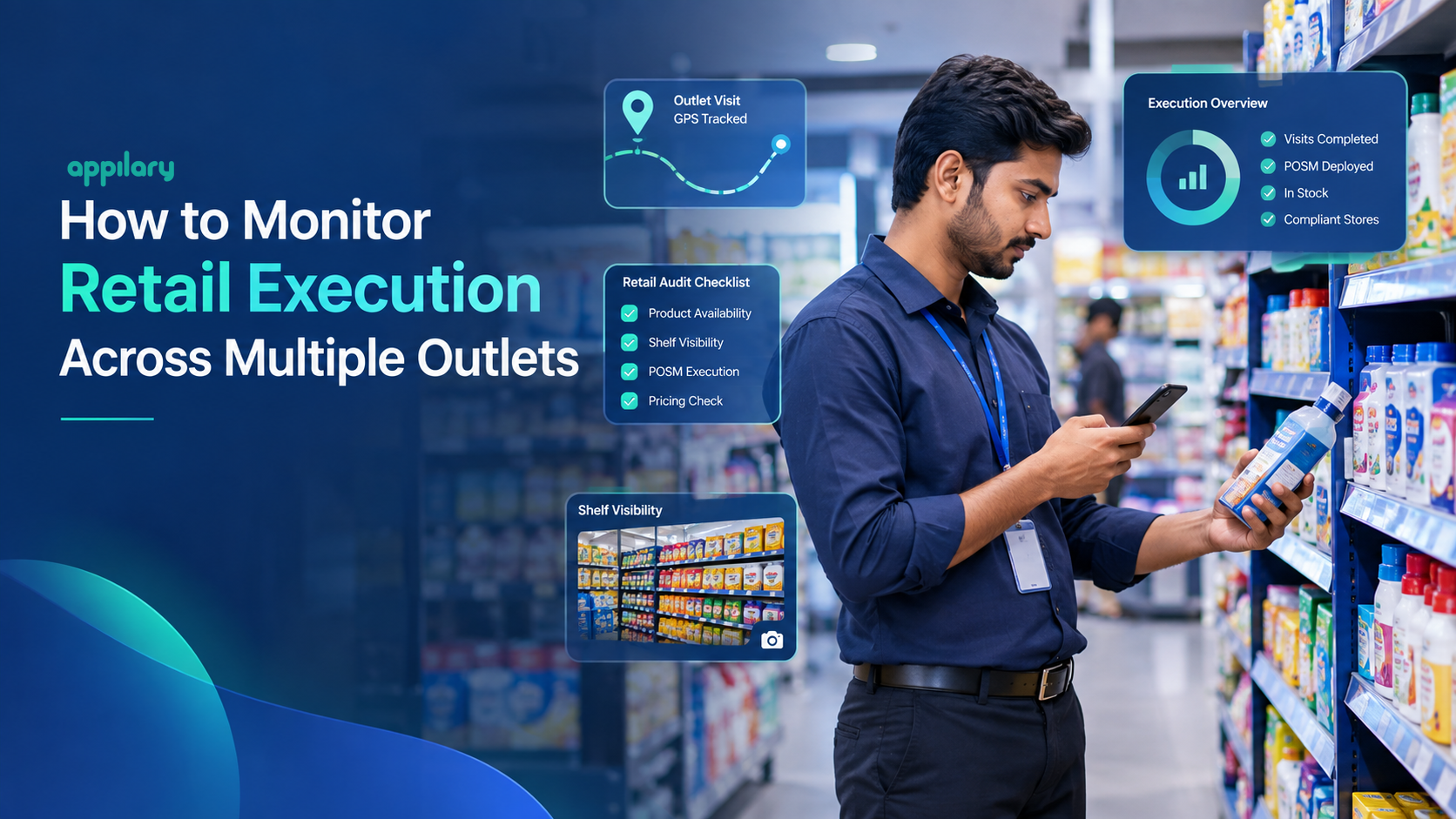
In FMCG, getting products into stores is only the first step. What happens inside the store matters just as much.
A product may be available in a retailer's inventory but still be missing from the shelf. Another product may be placed in the wrong location, have poor visibility, or have promotional material that is missing or incorrectly placed. These small execution issues can affect product visibility and sales opportunities.
Traditionally, FMCG companies depend on sales representatives and merchandisers to visit stores, check shelves, take photos, and report what they see. While this process works, manually checking thousands of store visits can take a lot of time and may lead to inconsistent reporting.
This is where AI-powered retail execution can make a difference.
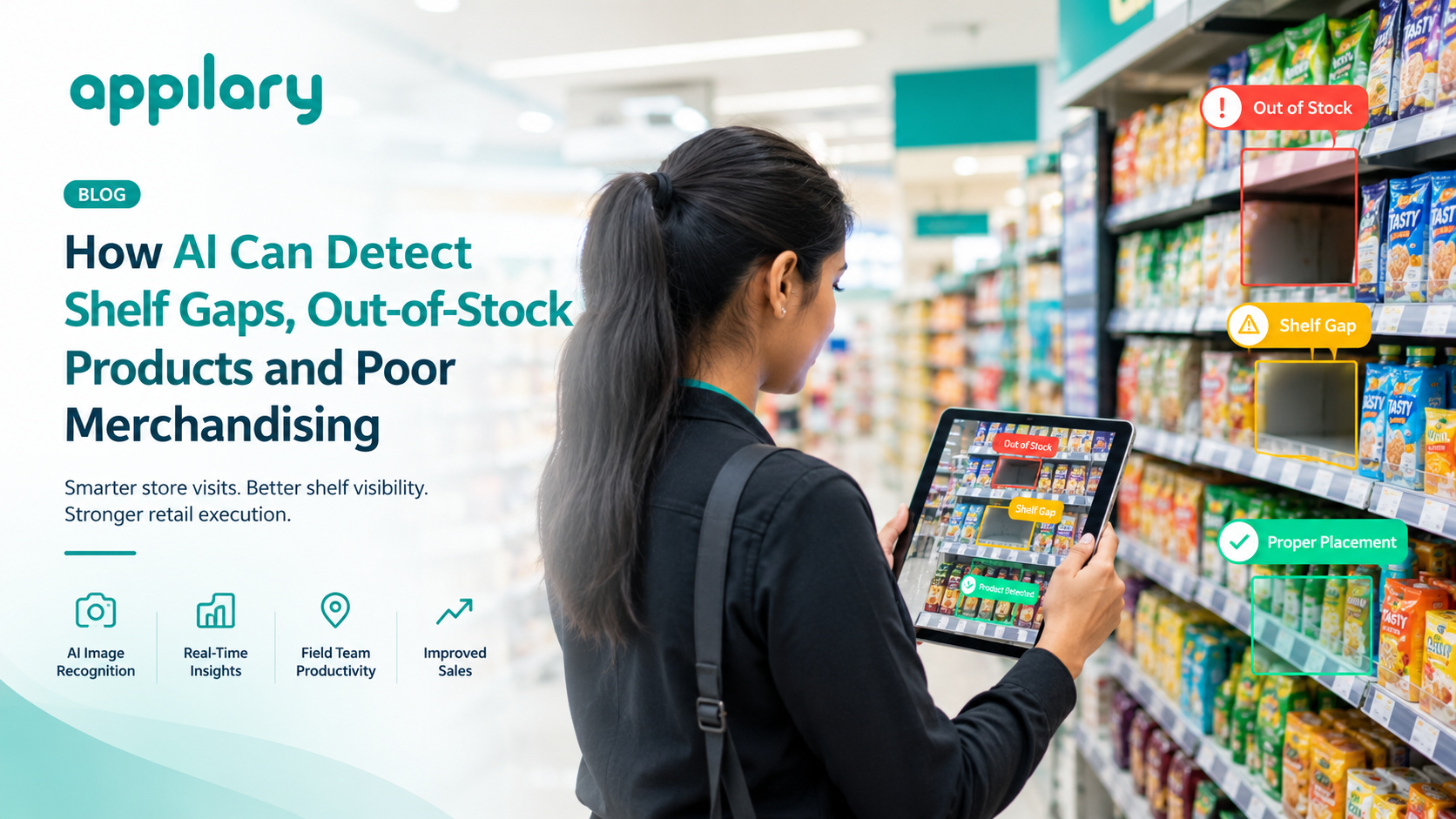
AI can analyse shelf images captured during store visits and help identify shelf gaps, out-of-stock products, product placement issues, and merchandising compliance. Instead of relying only on manual observation, sales teams can use image-based insights to understand what is actually happening at the retail shelf.
What Is AI-Powered Shelf Monitoring?
AI-powered shelf monitoring uses technologies such as computer vision and image recognition to analyse photos of retail shelves.
A sales representative or merchandiser can capture a photo of a shelf using a mobile device. AI can then analyse the image and identify products, their position, visibility, and other merchandising conditions.
For FMCG brands, this can provide a faster way to monitor thousands of retail outlets without requiring every image to be checked manually.
The technology can help answer simple but important questions:
Is the product present on the shelf?
Is there a gap where a product should be?
Is the product visible to shoppers?
Is the correct product placed in the expected location?
Are promotional materials properly displayed?
Are products arranged according to the merchandising guidelines?
These insights can help field and sales teams take action faster.
How AI Detects Shelf Gaps
A shelf gap occurs when there is empty space where a product is expected to be displayed.
For example, an FMCG brand may expect three variants of a product to be available on a particular shelf. During a store visit, one variant may be missing even though the other products are present.
When a shelf image is captured, AI-based image recognition can analyse the visible products and compare them with the expected product assortment.
If a product that should be present cannot be detected, the system can flag a potential shelf gap.
This helps the field team identify issues during the store visit instead of waiting for a manual report later.
How AI Can Identify Out-of-Stock Products
Out-of-stock situations can directly affect product availability and shopper experience.
AI can help identify potential out-of-stock conditions by analysing shelf images and detecting whether the expected SKU is visible.
For example, imagine a retailer is supposed to stock five different SKUs from a particular brand. During a visit, the merchandiser captures a shelf photo. The AI system identifies only four SKUs.
The missing SKU can be flagged for further attention.
It is important to understand that an image-based system generally identifies what is visible on the shelf. It cannot always determine whether a product is completely unavailable in the store or simply stored somewhere else. This is why AI insights can work alongside inventory and sales data for a more complete picture.
Detecting Poor Product Placement
Having a product in the store does not always mean it has good visibility.
Products can be placed in the wrong section, positioned incorrectly, hidden behind other products, or placed where shoppers are less likely to notice them.
AI-powered image analysis can help brands identify these merchandising issues from store images.
For example, a brand may have defined guidelines for where a particular SKU should appear. If the captured shelf image does not match those expectations, the visit can be flagged for review.
This gives sales managers better visibility into actual in-store execution.
Monitoring Planogram Compliance
Many FMCG brands use planograms to define how products should be arranged on shelves.
A planogram may specify product position, number of facings, product sequence, and shelf placement.
Checking planogram compliance manually across hundreds or thousands of outlets can be difficult.
AI can help automate parts of this process by analysing shelf images and comparing detected products with expected merchandising guidelines.
This can help identify situations such as:
Products placed in the wrong position.
Fewer product facings than expected.
Missing SKUs.
Incorrect product sequence.
Poor shelf visibility.
Such insights can help field teams correct merchandising issues during subsequent visits.
AI Can Also Help Check POSM Compliance
Trade merchandising is not only about products on shelves.
Point-of-sale materials such as posters, danglers, standees, shelf strips, wobblers, and other promotional materials can also play an important role in retail execution.
AI-based image recognition can be used to check whether certain POSM elements are visible in a store image.
For example, if a campaign requires a particular promotional display, the system can help identify whether the expected material is present.
This can reduce the need for managers to manually review every store image.
From Store Photos to Actionable Insights
One of the biggest advantages of AI-powered merchandising is that it can turn simple store photos into structured information.
Instead of having thousands of images sitting in a reporting system, brands can extract useful information from those images.
A typical process can look like this:
The field representative visits the outlet.
The representative captures a shelf or store image.
The AI analyses the image.
Products and merchandising elements are identified.
Potential gaps or compliance issues are detected.
The results are recorded against the store visit.
The sales or merchandising team can review the issue and take appropriate action.
This makes store visits more useful because the captured image becomes more than just proof of a visit.
Why FMCG Brands Need AI-Based Merchandising
FMCG companies often manage large numbers of products across thousands of retail outlets.
As the number of stores and SKUs increases, manually monitoring every shelf becomes increasingly difficult.
AI can help by making the process more scalable.
Instead of asking managers to manually inspect every image, AI can help identify images or store visits that require attention.
This can save time for sales managers and allow them to focus on important execution issues.
Benefits of AI-Powered Trade Merchandising
AI-based merchandising can support FMCG teams in several ways.
Faster Store Audits
Sales representatives can capture images during normal store visits, while AI handles much of the initial image analysis.
Better Shelf Visibility
Brands can identify situations where products are missing, poorly positioned, or not receiving the expected shelf visibility.
Reduced Manual Checking
Managers do not necessarily need to manually inspect every store image. AI can highlight potential issues that require attention.
Consistent Retail Execution
Standard merchandising rules can be applied across different stores, territories, and field teams.
Faster Issue Identification
Potential shelf gaps and merchandising issues can be identified closer to the time they occur, allowing teams to respond faster.
Better Field-Team Productivity
Instead of spending excessive time documenting and explaining every merchandising issue, field teams can use automated image-based reporting as part of their regular store visits.
AI Does Not Replace the Field Sales Team
AI is most useful when it supports people rather than simply replacing manual work.
A merchandiser still understands the store environment, retailer relationship, local competition, and practical challenges that may not be visible in a photograph.
AI can handle repetitive image analysis and highlight potential problems. The field team can then verify the issue and decide what action is appropriate.
This combination of human experience and AI-based analysis can make retail execution more effective.
Combining AI With Field Sales Automation
AI becomes even more useful when it is connected with a broader field sales automation system.
A field sales platform can bring together store visits, GPS-based attendance, outlet information, product data, shelf images, merchandising checks, and reporting.
For example, during a store visit, a sales representative can capture a shelf image. AI can analyse the image and identify potential product or merchandising issues. The result can then become part of the store's visit report.
This creates a connected workflow from store visit to image capture to analysis and reporting.
The Future of AI in Trade Merchandising
Retail execution is becoming increasingly data-driven.
As AI-based image recognition continues to improve, FMCG companies can use store images not only to verify visits but also to understand what is happening at the shelf.
The future of trade merchandising is likely to involve a combination of field teams, mobile technology, computer vision, real-time reporting, and business intelligence.
The goal is simple: help brands understand what is happening inside retail stores and give their teams the information they need to improve execution.
Conclusion
Shelf gaps, out-of-stock products, poor product placement, and merchandising issues can be difficult to monitor when a brand manages thousands of retail outlets.
AI-powered image recognition provides a practical way to analyse store and shelf images at scale. It can help identify missing products, shelf gaps, placement issues, planogram deviations, and POSM compliance problems.
When combined with field sales automation and real-time reporting, AI can turn routine store visits into valuable sources of retail intelligence.
For FMCG brands, this means moving from simply asking, "Did the sales representative visit the store?" to asking a more useful question: "What actually happened at the shelf?"