Introduction
In the FMCG industry, sales representatives visit dozens or even hundreds of retailers every week. Without a structured FMCG beat plan, field sales teams can waste valuable time travelling between outlets, miss important retailers, and struggle to achieve their daily sales targets.
An effective beat plan for FMCG sales teams organizes retailers into manageable routes and assigns them to sales representatives based on location, visit frequency, territory, outlet potential, and business priorities.
Traditionally, companies create FMCG sales beat plans using spreadsheets, paper schedules, or manual instructions. As sales teams grow, however, manual planning becomes difficult to maintain.
Modern beat planning software and FMCG field sales automation software allow businesses to create digital beats, optimize routes, track field visits using GPS, monitor outlet coverage, and analyze sales team performance.
This guide explains how to create an effective beat plan for FMCG sales teams, what information should be included, common mistakes to avoid, and how technology can make beat planning more efficient.
The Problem: Poor Beat Planning Affects FMCG Sales
A sales representative may be responsible for visiting 20–40 outlets in a day. If those outlets are not organized into an efficient route, several problems can occur.
Common FMCG beat planning challenges include:
- Too much travel between outlets
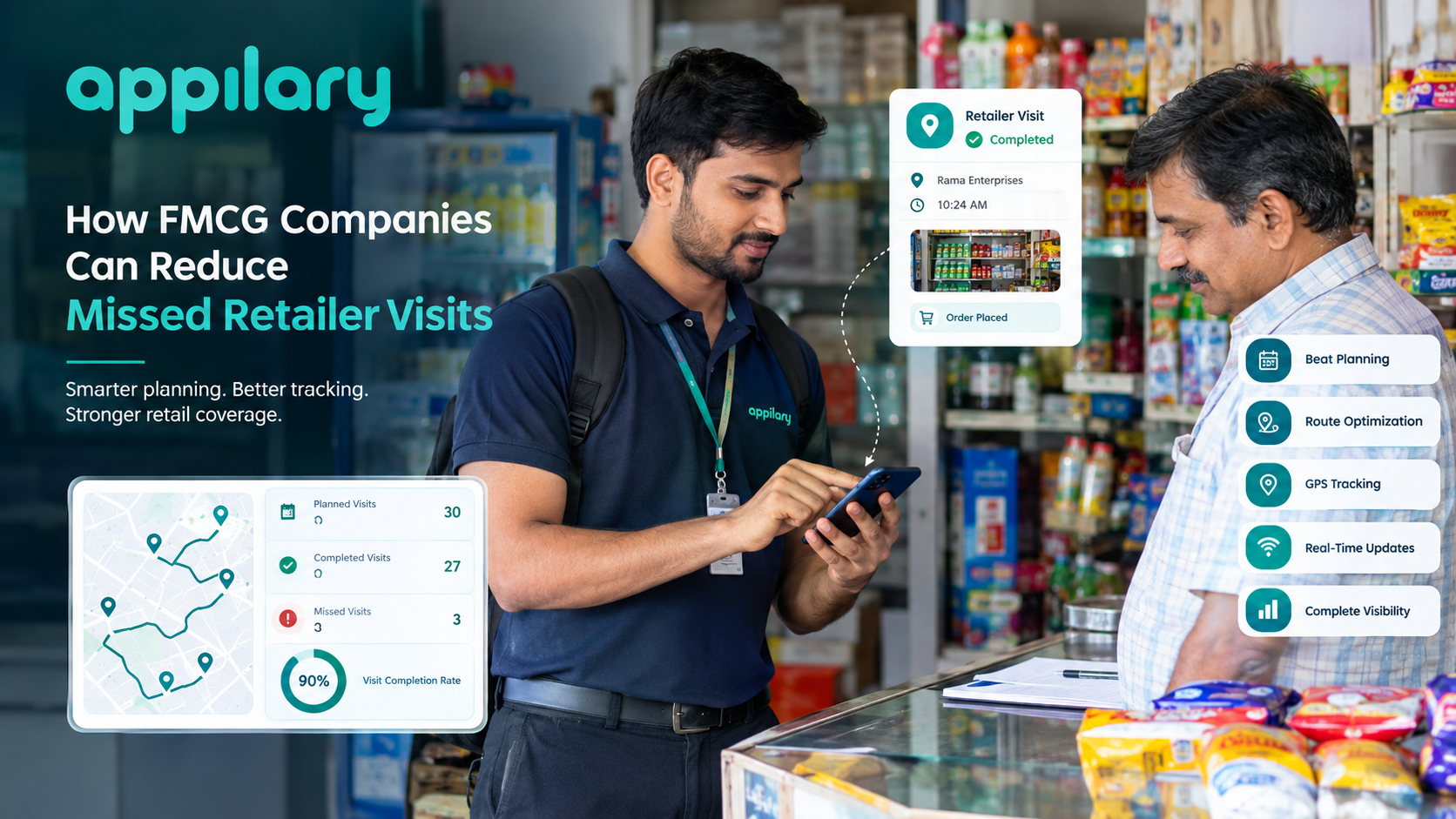
- Missed retailer visits
- Uneven outlet coverage
- Repeated visits to low-priority outlets
- Important retailers receiving fewer visits
- Difficulty tracking sales representative activity
- Poor coordination between managers and field teams
- Inaccurate or delayed visit reports
- Difficulty measuring beat completion
- Lack of visibility into actual field execution
For example, if a salesperson has 30 assigned retailers but the outlets are spread across different areas, an inefficient route can consume a significant portion of the working day in travel rather than selling.
A properly designed FMCG sales route plan helps solve this problem.
Why Does Beat Planning Become Ineffective?
Several factors can make an FMCG beat plan difficult to manage.
1. Large Number of Retail Outlets
FMCG companies may serve thousands of retailers across multiple territories. Manually organizing every retailer into an efficient route can become complicated.
2. Different Visit Frequencies
Not every outlet needs to be visited every day.
High-volume retailers may require frequent visits, while smaller outlets may only need weekly or fortnightly visits.
3. Geographical Distance
Retailers located far apart can increase travel time and reduce the number of productive sales visits a representative can complete.
4. Changing Sales Priorities
New product launches, promotions, seasonal demand, and retailer performance can change which outlets need greater attention.
5. Manual Monitoring
When managers rely on spreadsheets and phone calls, it can be difficult to determine whether representatives actually followed their assigned beat.
The Modern Solution: Create a Data-Driven FMCG Beat Plan
An effective FMCG beat plan should not simply be a list of retailers.
It should answer five important questions:
Who should visit? → Which outlets should they visit? → When should they visit? → What route should they follow? → How will the visit be measured?
A modern beat planning software can help answer all five.
Instead of maintaining static spreadsheets, managers can use digital FMCG sales route planning to organize outlets based on geography, sales potential, visit frequency, and representative availability.
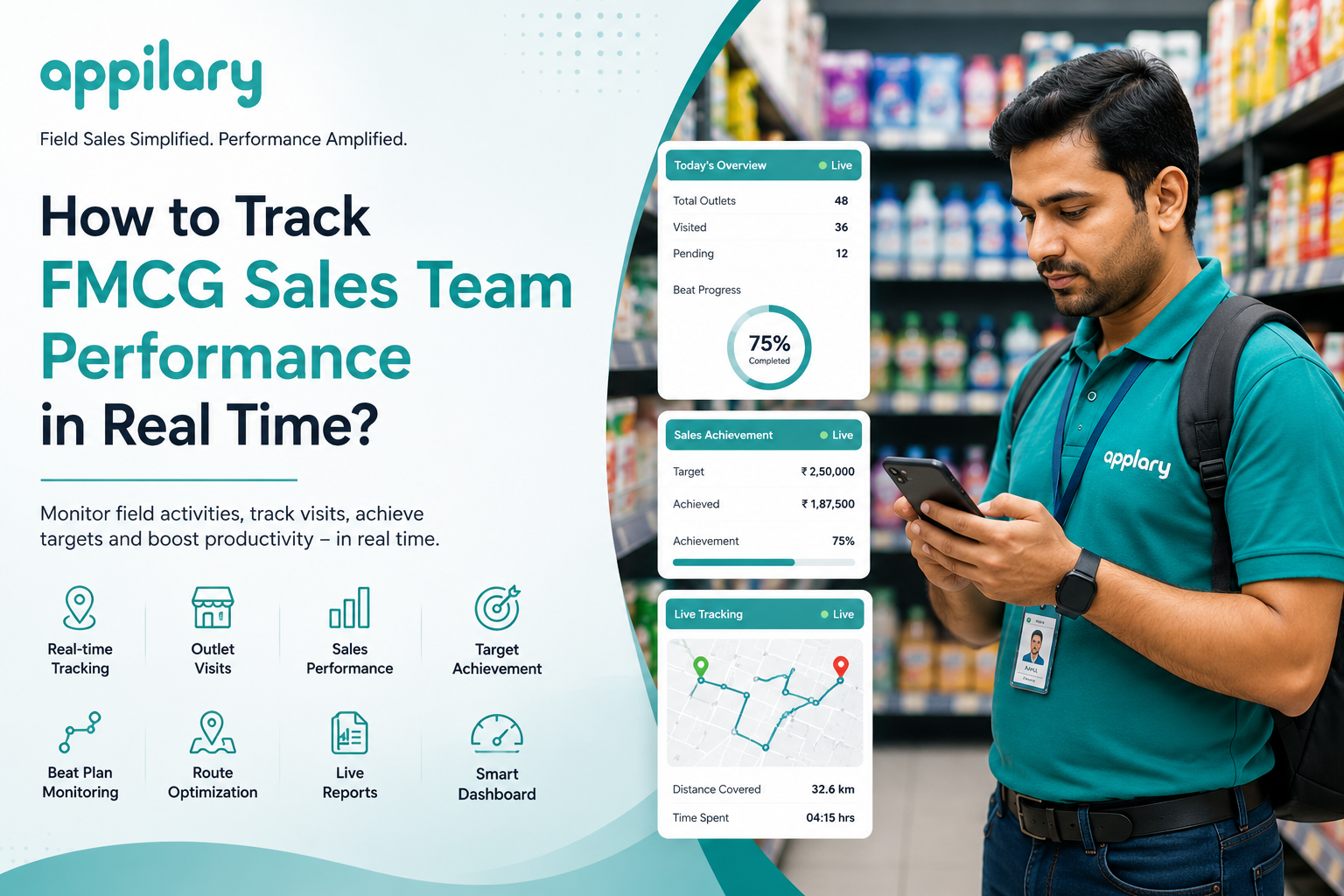
The system can then track actual field execution using GPS and generate reports for managers.
How to Create an Effective Beat Plan for FMCG Sales Teams
Step 1: Create a Complete Outlet Mapping
Start by creating a centralized list of all retailers and outlets.
Important information can include:
- Outlet name
- Retailer name
- Outlet address
- GPS location
- Territory
- District
- Market
- Outlet type
- Sales representative
- Distributor
- Previous sales
- Visit frequency
- Outlet potential
Accurate outlet data is the foundation of effective FMCG territory management.
Step 2: Divide Outlets by Territory
Group retailers based on geographical areas.
For example:
Territory A → Market 1 → Market 2 → Market 3
Territory B → Market 4 → Market 5 → Market 6
This reduces unnecessary movement between distant locations and makes territory management easier.
Step 3: Classify Outlets by Potential
Not every outlet contributes equally to sales.
You can classify outlets into categories such as:
- High-potential outlets
- Medium-potential outlets
- Low-potential outlets
- New outlets
- Strategic outlets
High-potential retailers may require more frequent visits than low-volume outlets.
This helps create a more effective FMCG outlet coverage strategy.
Step 4: Determine Visit Frequency
Assign an appropriate visit frequency to each outlet.
For example:
- High-priority outlet → 2–3 visits per week
- Medium-priority outlet → 1 visit per week
- Low-priority outlet → 1 visit every 2 weeks
The exact frequency should depend on sales volume, product category, retailer requirements, territory characteristics, and company objectives.
Step 5: Group Nearby Outlets Into Beats
Once outlets are categorized, group geographically nearby retailers into individual beats.
For example:
Beat 1: Market A + Market B
Beat 2: Market C + Market D
Beat 3: Market E + Market F
The objective is to create a route where the salesperson can complete the planned outlet visits within the available working hours.
Step 6: Optimize the Sales Route
After creating the beats, determine the most efficient route between outlets.
A good FMCG sales route plan should minimize:
- Unnecessary travel
- Backtracking
- Long distances between outlets
- Traffic-related delays where possible
This gives sales representatives more time for productive activities such as order collection, merchandising, retailer engagement, and product promotion.
Step 7: Assign Beats to Sales Representatives
Assign each beat according to:
- Territory
- Representative availability
- Experience
- Workload
- Distributor responsibility
- Outlet relationships
Avoid giving one representative significantly more outlets or travel distance than another unless there is a specific business reason.
Step 8: Create a Daily and Weekly Beat Schedule
Turn the beats into a structured schedule.
For example:
Day
Beat
Target Outlets
Monday
Beat 1
25
Tuesday
Beat 2
28
Wednesday
Beat 3
22
Thursday
Beat 4
27
Friday
Beat 5
24
Saturday
Beat 6
20
This gives sales representatives a clear daily plan and helps managers monitor execution.
Step 9: Track Planned vs. Actual Visits
Creating a beat plan is only the first step.
Managers should also measure whether the plan is being executed.
Important metrics include:
- Planned outlets
- Actual outlets visited
- Missed outlets
- Additional outlets visited
- Visit duration
- Travel distance
- Productive calls
- Orders collected
This planned vs. actual visit tracking helps managers identify gaps between planning and field execution.
Step 10: Review and Optimize the Beat Plan
An FMCG beat plan should not remain unchanged forever.
Review performance regularly and adjust the plan based on:
- Outlet sales
- Outlet growth
- Missed visits
- Travel time
- Representative productivity
- New retailers
- Closed retailers
- Seasonal demand
- New product launches
Continuous optimization can make the FMCG sales route plan more effective over time.
Features of Beat Planning Software
Modern beat planning software for FMCG can automate many of these activities.
GPS-Based Field Tracking
GPS tracking helps managers understand where field representatives are working and supports location-based visit verification.
Digital Beat Planning
Managers can create and assign beats digitally instead of maintaining multiple spreadsheets.
Route Planning
Sales routes can be organized around outlet locations to reduce unnecessary travel.
Outlet Management
A centralized outlet database makes it easier to manage retailer information, territory assignments, and visit frequency.
Planned vs. Actual Tracking
Managers can compare the assigned beat with the actual outlets visited.
Real-Time Field Monitoring
Managers can get better visibility into ongoing field activity instead of waiting for end-of-day reports.
Automated Sales Reports
The system can generate reports covering sales visits, outlet coverage, beat completion, sales activity, and representative performance.
Performance Dashboards
Dashboards can help managers track KPIs such as:
- Beat completion rate
- Outlet coverage
- Productive calls
- Sales per representative
- Missed visits
- Order conversion
- Travel distance
- Visit frequency
Benefits of an Effective FMCG Beat Plan
Better Outlet Coverage
A structured beat ensures that important retailers are included in the sales representative's regular schedule.
Higher Sales Productivity
Reducing unnecessary travel gives representatives more time to engage with retailers and generate orders.
Lower Travel Time and Cost
Geographically organized routes can reduce unnecessary movement.
Fewer Missed Visits
Clearly defined schedules make it easier to identify and follow up on missed outlets.
Better Field Force Management
Managers gain greater visibility into sales representative activities and territory execution.
Improved Retailer Relationships
Consistent and planned retailer visits help sales representatives maintain regular relationships with customers.
Better Sales Planning
Historical sales and field activity data can be used to improve future beat schedules.
Industry Use Cases
FMCG General Trade
Sales representatives can use beat plans to systematically visit kirana stores, independent retailers, wholesalers, and distributors.
Beverage Companies
Beat planning can help organize outlet visits for order collection, stock checks, merchandising, and promotional execution.
Food and Consumer Goods
Companies can manage retailer visits, product availability checks, new product launches, and order collection.
Personal Care and Home Care
Field teams can use structured beats to improve outlet coverage and monitor product visibility.
Distributor Sales Teams
Distributors can organize salesperson routes and track retailer visits across their assigned territories.
Common FMCG Beat Planning Mistakes to Avoid
Creating Beats Without Considering Geography
Grouping outlets based only on sales volume can create inefficient routes.
Giving Every Outlet the Same Visit Frequency
Different outlets have different sales potential and should not always receive identical visit schedules.
Ignoring Actual Field Data
A beat plan should be updated based on real-world execution and sales performance.
Focusing Only on Number of Visits
More visits do not necessarily mean better sales. Companies should also track productive calls, orders, sales value, and outlet coverage.
Not Tracking Missed Visits
If managers don't monitor missed outlets, important retailers can gradually fall out of the sales cycle.
Keeping the Beat Plan Static
Markets change. New outlets open, retailers close, sales territories change, and product priorities shift. Beat plans should be reviewed regularly.
Conclusion
Creating an effective beat plan for FMCG sales teams requires more than assigning a list of retailers to sales representatives. A successful beat plan considers outlet location, sales potential, visit frequency, territory, representative workload, route efficiency, and business priorities.
Manual spreadsheets can work for small teams, but growing FMCG organizations can benefit from beat planning software that combines digital route planning, GPS tracking, outlet management, field force monitoring, visit tracking, and real-time sales reports.
When planned and monitored correctly, an FMCG beat plan can help companies improve outlet coverage, sales representative productivity, field sales execution, and territory management.
Want to make your FMCG sales team's beat planning smarter? Explore a field sales automation solution that helps you plan beats, track field visits, monitor outlet coverage, and turn field activity into measurable sales performance.