Introduction
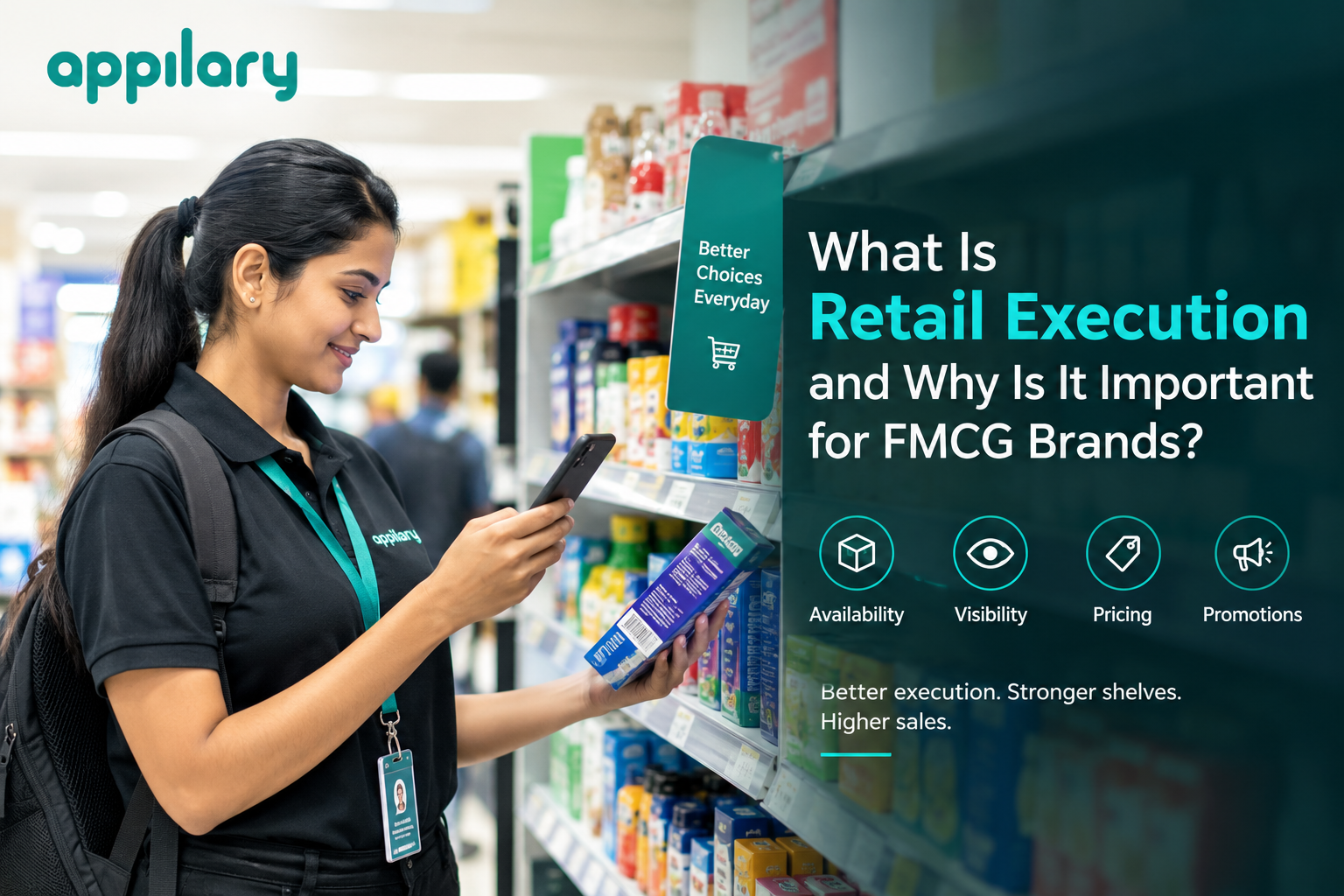
For an FMCG brand, getting a product into the market is only the beginning. The real challenge is making sure that the product is available, visible, correctly priced, properly displayed, and supported by promotions when a shopper walks into a store.
This is where retail execution becomes important.
Retail execution refers to the activities that FMCG and consumer goods companies carry out at the retail outlet to ensure that their sales, merchandising, pricing, promotion, and visibility plans are actually implemented at the point of sale. It is also commonly referred to as in-store execution, field execution, or perfect store execution.
In simple terms:
Retail execution is the process of turning an FMCG brand's sales and marketing plans into reality at the retail shelf.
A brand may have excellent products, attractive packaging, strong advertising, and extensive distribution. But if the product is missing from the shelf, hidden behind competitors, incorrectly priced, or not supported by the planned promotion, the brand can still lose the sale.
What Is Retail Execution in FMCG?
Retail execution in FMCG is the systematic process of ensuring that products and promotional activities are executed correctly across retail outlets.
It typically includes:
- Product availability
- Retail outlet coverage
- Shelf visibility
- Product placement
- Planogram compliance
- Stock availability
- Pricing compliance
- Promotional execution
- POSM deployment
- Display compliance
- Competitor monitoring
- Order generation
- Retailer engagement
- Photo-based store audits
- Corrective actions
The objective is simple: make sure the right product is available at the right outlet, in the right quantity, at the right price, with the right visibility.
Modern retail execution also increasingly relies on mobile field applications, real-time data, route planning, digital audits, and photographic proof to connect what happens in stores with what managers see at headquarters.
Why Is Retail Execution Important for FMCG Brands?
FMCG companies operate across thousands or even millions of retail outlets. Headquarters may create a detailed strategy, but the final customer experience is determined inside the store.
This creates a critical gap:
What the company planned → What the field team executed → What the retailer actually implemented → What the shopper finally saw
Retail execution helps reduce this gap.
1. Improves Product Availability
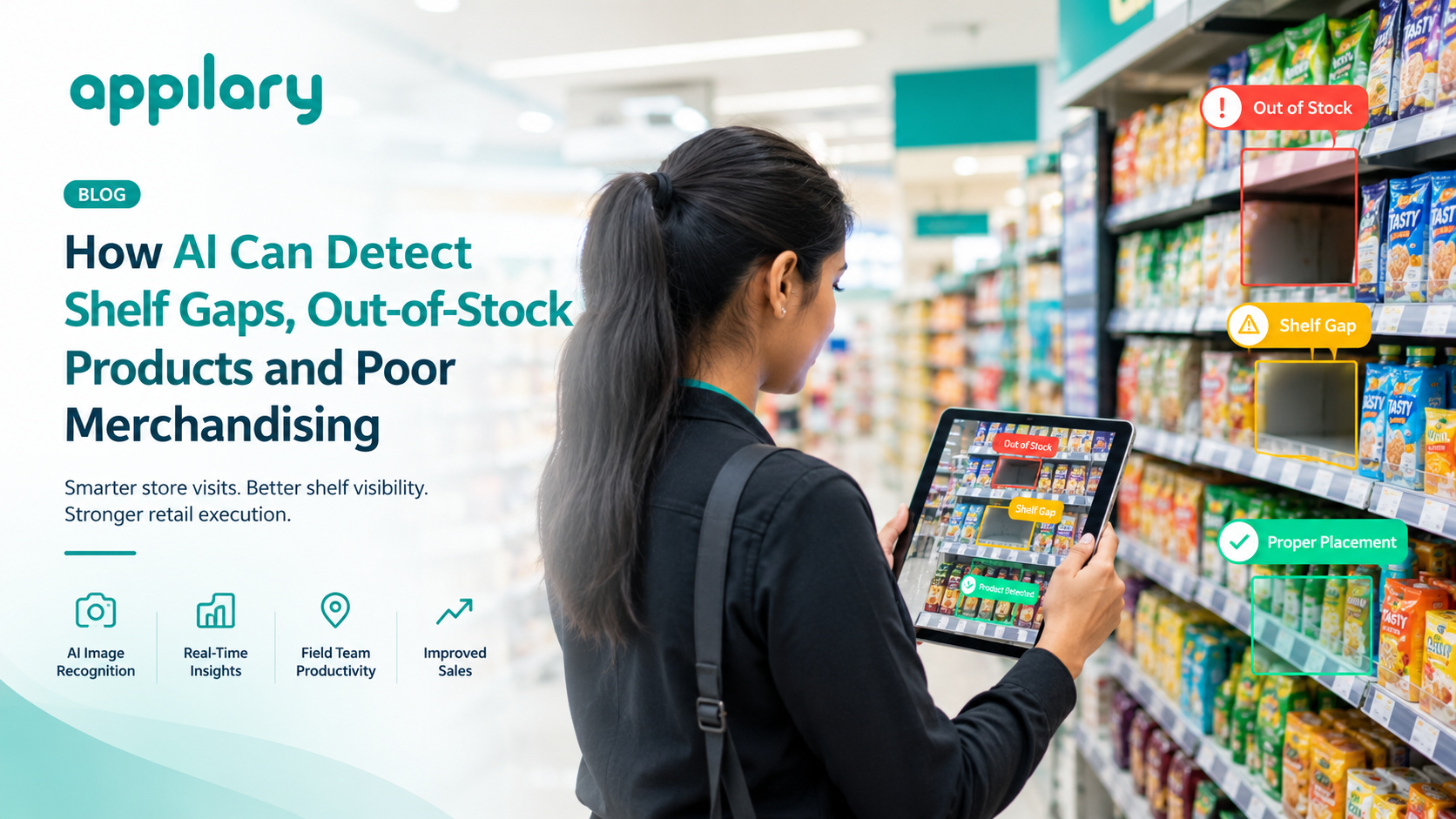
One of the biggest problems for FMCG brands is out-of-stock products.
Imagine a customer wants to purchase a particular biscuit, beverage, personal-care product, or household item. If it isn't available, the customer may immediately purchase a competitor's product.
Retail execution teams can regularly check:
- Which SKUs are available
- Which SKUs are out of stock
- Which products need replenishment
- Whether fast-moving products are adequately stocked
This allows companies to identify availability problems before they become lost sales.
2. Increases Shelf Visibility
Having a product in a store does not automatically mean that shoppers will notice it.
A product may be:
- Placed on the wrong shelf
- Hidden behind competing products
- Given insufficient shelf space
- Missing from a promotional display
- Positioned away from the expected planogram
Retail execution helps field teams verify whether products are receiving the expected shelf presence and visibility.
For FMCG brands, this is especially important in competitive categories where multiple brands compete for the shopper's attention.
3. Ensures Promotional Compliance
FMCG brands invest heavily in trade promotions, discounts, displays, retailer schemes, and promotional campaigns.
But launching a promotion is different from executing it correctly.
Field teams may need to verify:
- Is the promotional display installed?
- Is the correct POSM being used?
- Is the promotion visible?
- Is the correct SKU being promoted?
- Is the retailer following the agreed promotion?
- Is the display placed in the correct location?
Retail execution provides a mechanism for checking whether promotional investments are actually being implemented in stores.
4. Improves Retail Outlet Coverage
For FMCG companies, consistent outlet coverage is critical.
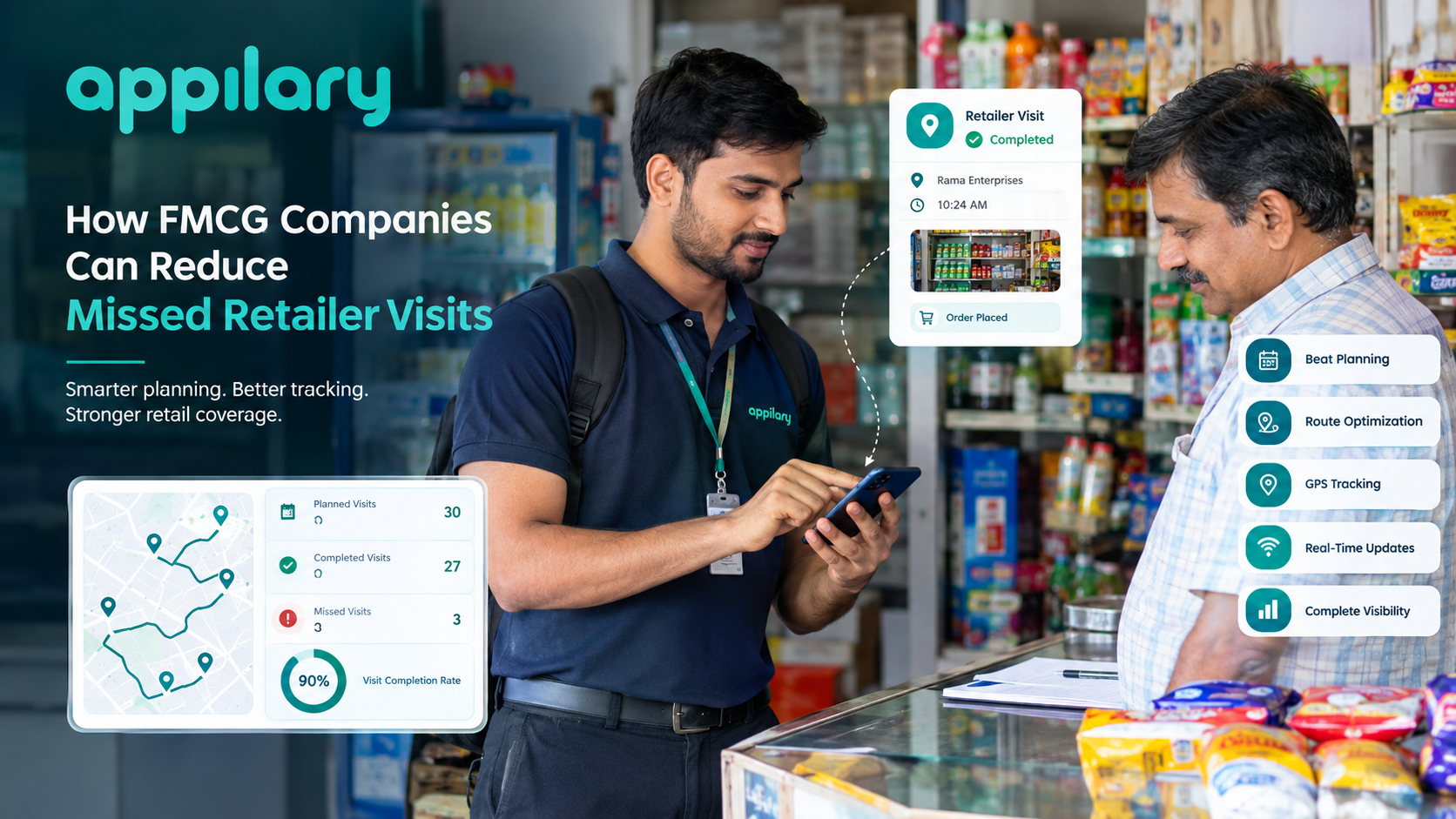
A sales representative may have 40 or 50 outlets planned for a particular beat, but without proper monitoring, some outlets may be skipped.
A strong retail execution process helps companies track:
Planned outlets → Visited outlets → Productive outlets → Orders generated → Issues identified
This gives managers a clearer picture of field performance.
5. Helps Maintain Pricing Compliance
Pricing can vary across markets and retail outlets.
Incorrect pricing can affect:
- Consumer demand
- Retailer margins
- Brand perception
- Promotional effectiveness
- Competitive positioning
Field representatives can capture retail prices during store visits and identify pricing deviations.
This gives sales managers visibility into what is actually happening in the market instead of relying entirely on reports from the field.
6. Improves Merchandising Compliance
Merchandising is an important part of FMCG retail execution.
Brands may define specific guidelines for:
- Product placement
- Shelf position
- Number of facings
- Display location
- POSM placement
- Promotional visibility
- Category arrangement
Retail execution ensures that these guidelines are checked consistently across outlets.
What Are the Key Components of Retail Execution?
A successful retail execution strategy usually covers several areas.
Product Availability
Ensuring the required SKUs are available at the outlet.
Shelf Visibility
Monitoring shelf share, product placement, facings, and visibility.
Planogram Compliance
Checking whether products are positioned according to the defined planogram.
Pricing Compliance
Verifying retail prices and promotional prices.
Promotion Execution
Checking whether schemes, displays, discounts, and promotional campaigns are being implemented correctly.
POSM Execution
Tracking installation and visibility of:
- Posters
- Standees
- Danglers
- Shelf strips
- Counter displays
- Branding materials
Outlet Coverage
Ensuring sales representatives and merchandisers visit the required outlets according to the planned beat or journey plan.
Competitor Monitoring
Capturing information about competitor products, prices, displays, promotions, and availability.
Photo Verification
Capturing photographs of shelves, displays, branding, and promotional execution provides visual evidence of what is happening inside the outlet.
Modern retail execution platforms increasingly combine these activities into a single field workflow with store visits, audits, photos, routing, analytics, and corrective actions.
What Is a Retail Execution Audit?
A retail execution audit is a structured assessment of how well a brand's products and activities are being executed inside a retail outlet.
During an audit, a field representative or merchandiser may check:
Availability - Are required SKUs available?
Visibility - Is the brand clearly visible?
Shelf Share - How much shelf space does the brand have?
Pricing - Is the product priced correctly?
Promotion - Is the promotion active?
POSM - Is branding material installed correctly?
Planogram - Is the product positioned correctly?
Competitor - What are competitors doing?
Stock - Is sufficient inventory available?
The results can then be converted into a retail execution score for individual outlets, territories, distributors, or sales teams.
What Are Retail Execution KPIs?
FMCG companies need measurable KPIs to understand whether their retail execution strategy is working.
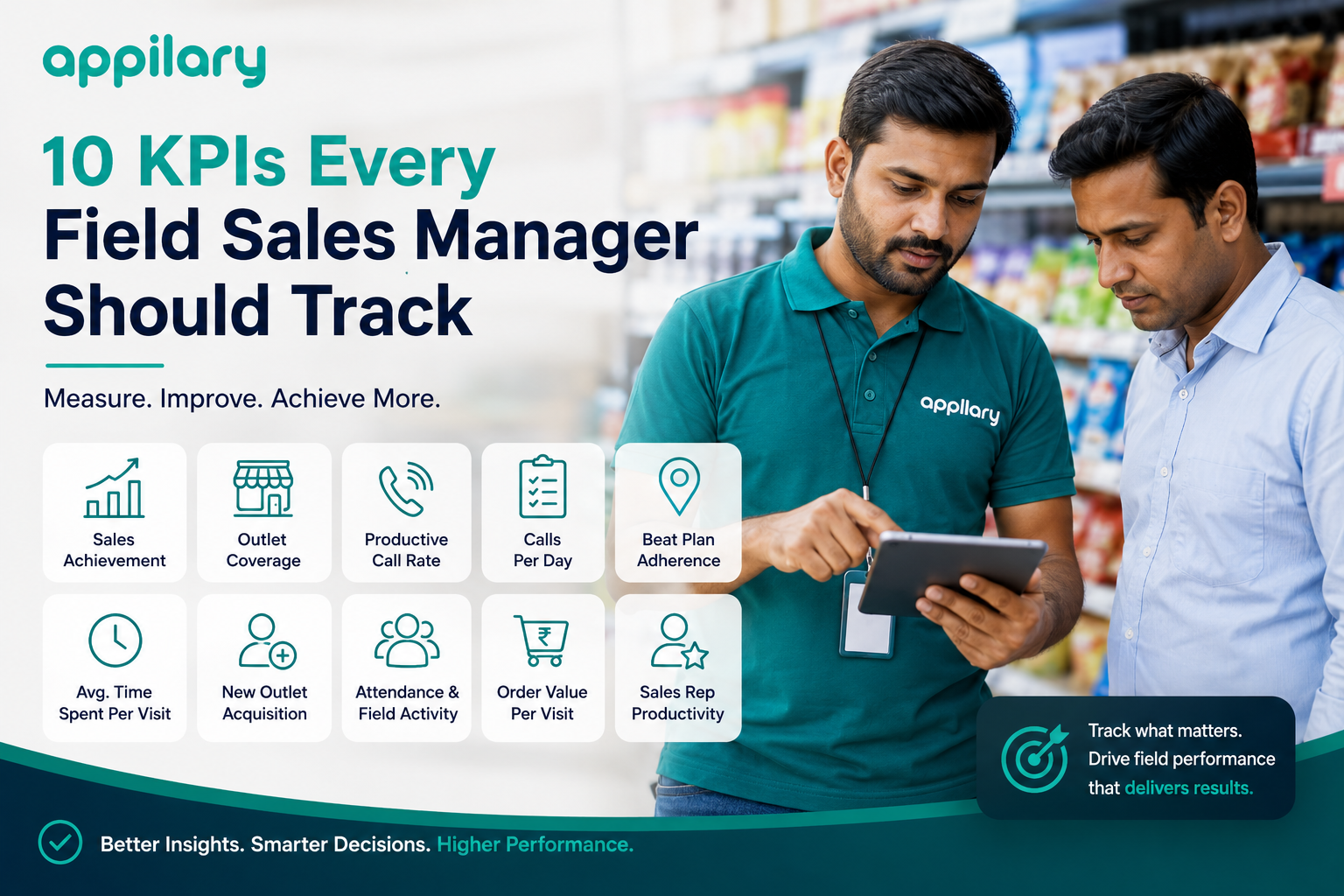
Some important retail execution KPIs include:
1. Outlet Coverage
Percentage of planned outlets actually visited.
2. Strike Rate
Percentage of visited outlets where an order was generated.
3. Product Availability
Percentage of outlets where the required products are available.
4. Out-of-Stock Rate
Percentage of outlets experiencing stock-outs.
5. Planogram Compliance
Percentage of outlets following the required product placement.
6. Display Compliance
Percentage of promotional displays executed according to guidelines.
7. POSM Compliance
Percentage of outlets with correctly installed POSM.
8. Shelf Share
Percentage of shelf space occupied by the brand compared with competitors.
9. Productive Calls
Number or percentage of sales visits that generate a meaningful commercial outcome.
10. Retail Execution Score
An overall score combining multiple store-level execution parameters.
Tracking these metrics allows managers to identify weak markets, underperforming outlets, execution gaps, and opportunities for corrective action.
What Problems Affect Retail Execution?
Even companies with large field teams can struggle with retail execution.
Common problems include:
Manual Reporting
Sales representatives may record store information in spreadsheets, WhatsApp messages, paper forms, or disconnected systems.
Lack of Real-Time Visibility
Managers may only discover execution problems during weekly or monthly reviews.
Inconsistent Store Visits
Some outlets may receive frequent visits while others are missed.
Poor Data Quality
Incomplete or inaccurate field reports make decision-making difficult.
No Proof of Execution
A manager may receive a report saying that a display was installed but have no visual evidence.
Delayed Corrective Action
By the time a problem reaches management, the promotion or sales opportunity may already be lost.
These challenges are particularly difficult for FMCG companies operating across large territories and diverse retail networks.
How Technology Improves Retail Execution
Technology can transform retail execution from a manual reporting process into a data-driven field execution system.
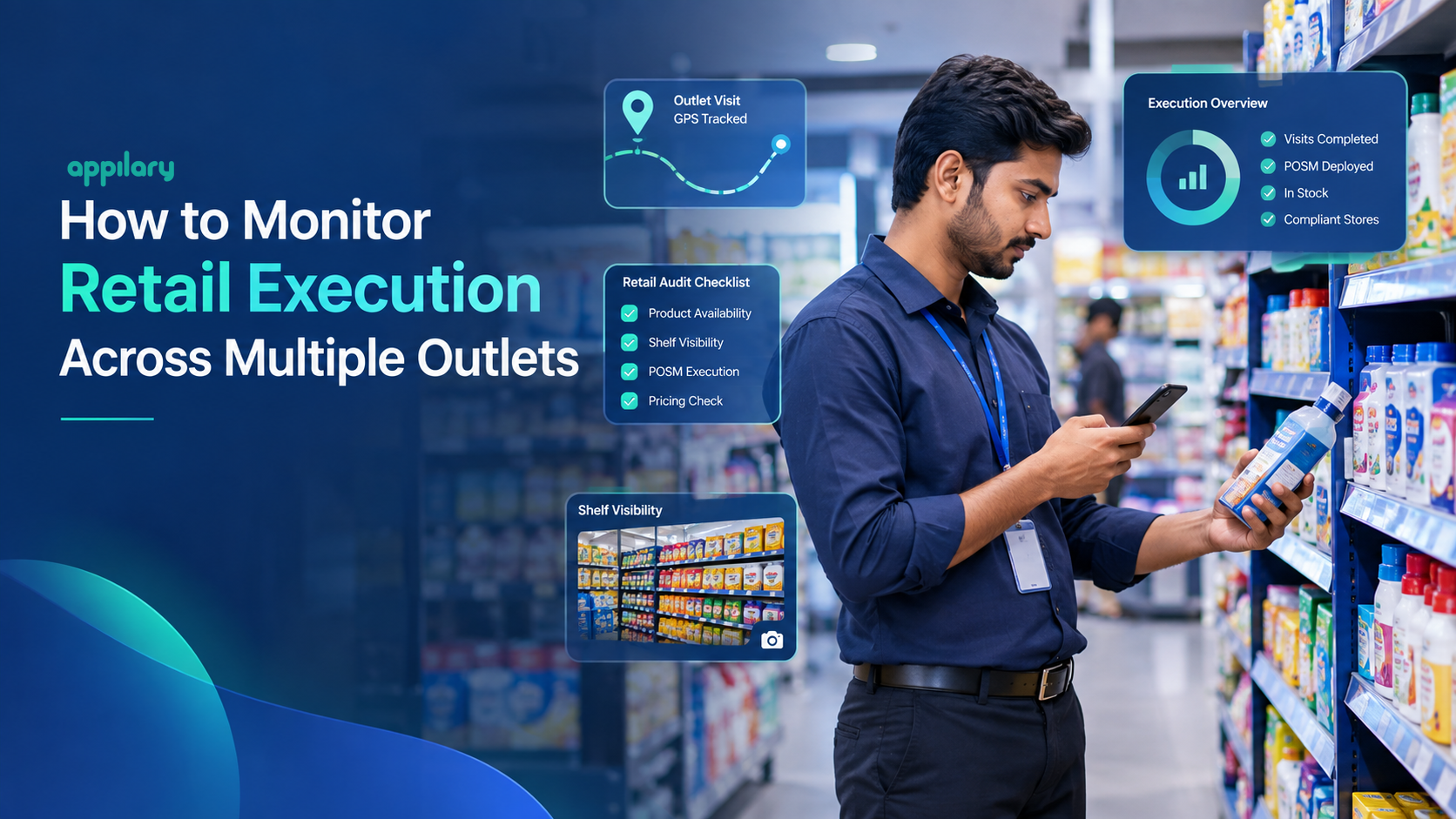
A retail execution platform can help FMCG companies manage the complete field workflow:
Plan → Visit → Audit → Capture → Verify → Analyse → Correct
For example, a field representative can use a mobile application to:
- View assigned outlets.
- Follow the planned beat.
- Check in at the outlet.
- Complete a retail audit.
- Check product availability.
- Capture shelf photographs.
- Record competitor information.
- Verify POSM and displays.
- Capture orders.
- Submit the visit.
The management team can then monitor the information through dashboards and identify execution gaps.
Modern retail execution software commonly combines store visits, field tasks, inventory or assortment checks, merchandising compliance, route planning, mobile order capture, and analytics.
Retail Execution in General Trade vs Modern Trade
Retail execution can look different depending on the sales channel.
General Trade
In traditional FMCG markets, execution may focus heavily on:
- Outlet coverage
- Beat adherence
- Product availability
- Order generation
- Retailer schemes
- Stock replenishment
- POSM
- Visibility
- Competitor activity
Modern Trade
Modern trade may place greater emphasis on:
- Planogram compliance
- Shelf share
- Promotional displays
- Pricing
- Assortment
- Display locations
- Category visibility
- Promotion compliance
The underlying objective remains the same: ensure that the company's commercial strategy is executed correctly at the point of sale.
How FMCG Brands Can Improve Retail Execution
A practical retail execution strategy can follow these steps:
Step 1: Define the Perfect Store
Clearly define what an ideal outlet should look like.
For example:
- Required SKUs
- Minimum stock
- Shelf position
- Number of facings
- Display requirements
- POSM requirements
- Pricing
- Promotion requirements
Step 2: Create Standardised Store Audits
Every field representative should follow the same audit structure so data can be compared across outlets and markets.
Step 3: Digitise Field Visits
Use a mobile application instead of relying entirely on paper forms and spreadsheets.
Step 4: Capture Photographic Evidence
Photos can help managers verify shelf and display execution.
Step 5: Track Execution KPIs
Monitor outlet coverage, availability, compliance, displays, orders, and other relevant KPIs.
Step 6: Create Exception-Based Alerts
Managers should be able to quickly identify problems such as:
- Out-of-stock products
- Missed outlets
- Poor display compliance
- Low shelf visibility
- Failed promotional execution
Step 7: Take Corrective Action
Retail execution becomes valuable when information leads to action.
The goal isn't simply to collect thousands of store reports. The goal is to identify execution gaps and fix them quickly.
The Business Impact of Strong Retail Execution
Effective retail execution can help FMCG brands:
- Improve product availability
- Increase shelf visibility
- Improve outlet coverage
- Reduce execution gaps
- Strengthen promotional compliance
- Improve merchandising standards
- Identify competitor activity
- Improve field team productivity
- Generate better retail intelligence
- Make faster business decisions
Ultimately, retail execution connects sales strategy with what actually happens in the market.
A strong marketing campaign may create consumer demand, but retail execution helps ensure that the consumer can actually find and purchase the product.
Conclusion
Retail execution is the bridge between an FMCG company's strategy and the retail shelf.
A brand can invest heavily in advertising, distribution, promotions, and sales planning, but those investments can lose their impact if execution at the outlet level is weak.
By consistently monitoring availability, visibility, pricing, promotions, merchandising, outlet coverage, POSM, and competitor activity, FMCG companies can gain greater control over what happens at the point of sale.
The future of retail execution is increasingly digital. Mobile field applications, real-time dashboards, photographic verification, automated audits, and data-driven insights can help FMCG companies move from simply tracking field activity to actively improving retail performance.
For brands operating across thousands of outlets, that shift can make retail execution a strategic growth capability rather than just a field reporting process.