In the highly competitive Fast-Moving Consumer Goods (FMCG) industry, every retail shelf matters. Whether it's a supermarket, grocery store, or kirana outlet, your product's visibility directly impacts purchasing decisions. Brands invest heavily in Point of Sale Materials (POSM) such as standees, shelf strips, danglers, posters, wobblers, and display units to attract customers. However, simply deploying these branding materials isn't enough—they must be installed correctly, maintained regularly, and monitored continuously.
Managing retail branding across hundreds or thousands of retail outlets manually is becoming increasingly difficult. This is where Retail Branding Automation Software helps FMCG companies monitor, verify, and optimize retail branding campaigns in real time.
Common Retail Branding Challenges Faced by FMCG Brands
Executing a successful retail branding campaign across multiple cities and distributors comes with several operational challenges. Without a proper Retail Branding Management System, brands often struggle with visibility, compliance, and reporting.
Major challenges include:
- Inconsistent branding across different retail stores
- Missing, damaged, or improperly placed POSM materials
- No real-time visibility into campaign execution
- Difficulty monitoring field merchandising teams
- Fake or outdated photo submissions from field staff
- Delayed reporting through WhatsApp or Excel sheets
- High operational costs due to physical audits
- Lack of centralized campaign data
- Poor compliance with retail branding guidelines
- Difficulty measuring campaign ROI
These issues not only reduce brand visibility but also impact customer engagement, retailer relationships, and overall sales performance.
Why Do These Problems Occur?
The root cause of these challenges is that many FMCG companies still depend on manual retail audit processes. Field executives often share updates through phone calls, spreadsheets, emails, or messaging apps, making it difficult for managers to verify whether branding activities have actually been completed.
Some of the most common reasons include:
- Manual reporting with no verification mechanism
- No centralized dashboard for retail branding monitoring
- Lack of GPS-based store visit tracking
- Human errors while collecting data
- Delayed communication between field teams and managers
- Limited visibility into distributor and promoter activities
- No automated alerts for missing or damaged branding materials
As retail networks continue to grow, these traditional processes become expensive, slow, and difficult to manage.
Manual Retail Branding Management: Why It No Longer Works
Many FMCG companies still rely on traditional retail audits to monitor branding execution. In this process, field executives visit stores, capture photographs, prepare reports, and send updates to supervisors.
Typical manual workflow
- Visit retail outlet
- Inspect branding materials
- Capture photos
- Share updates via WhatsApp or Email
- Prepare Excel reports
- Managers manually review compliance
Although this method may work for a small number of stores, it creates several limitations for large retail networks.
Limitations of manual monitoring
- Time-consuming reporting process
- High travel and operational costs
- No live campaign visibility
- Delayed corrective actions
- Difficult to monitor thousands of retail outlets
- Increased chances of fake reporting
- No historical analytics for decision-making
As FMCG businesses expand, manual retail branding management becomes inefficient and unsustainable.
Smart Solution: Retail Branding Automation Software
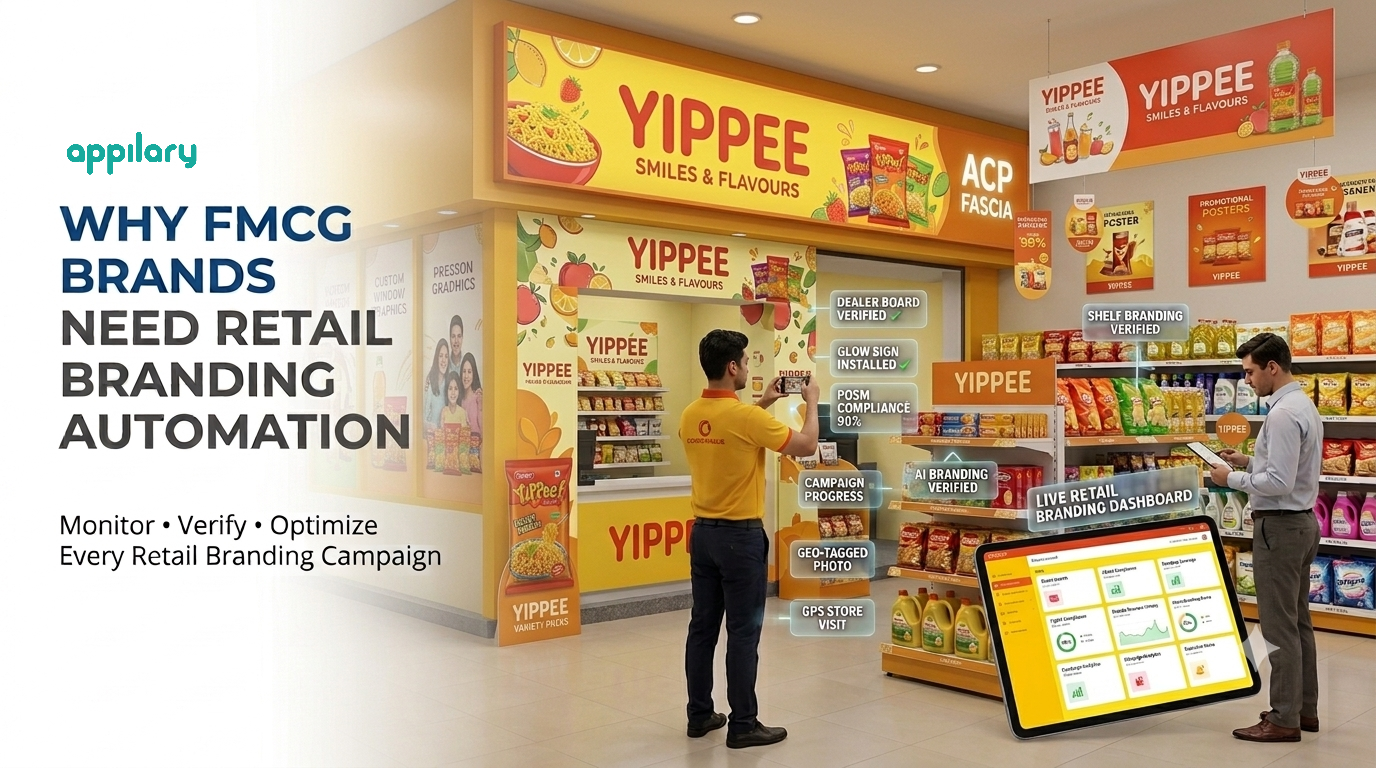
A Retail Branding Automation Software digitizes the entire retail branding process by connecting field teams, distributors, supervisors, and brand managers on a single platform.
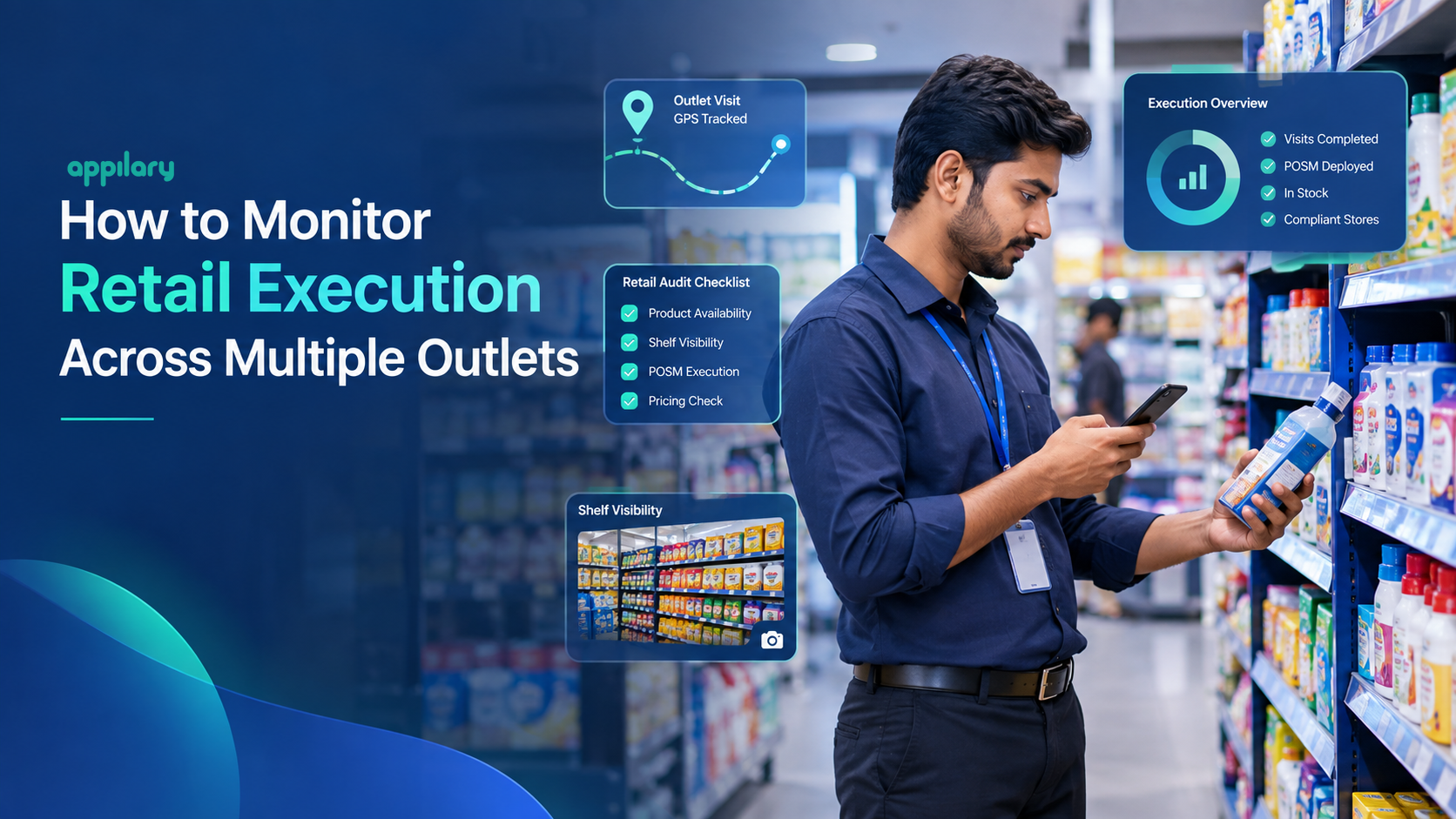
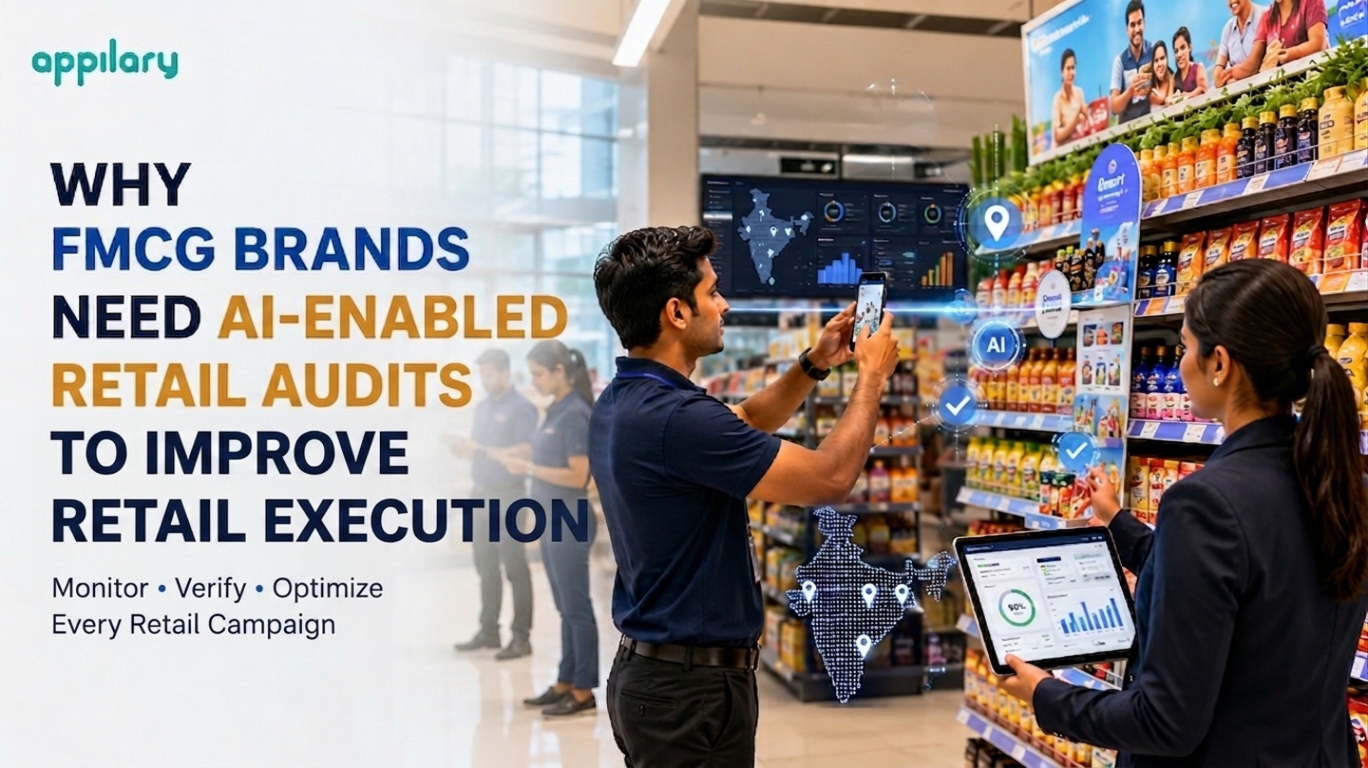
Instead of relying on manual reports, field executives can capture geo-tagged and time-stamped photographs through a mobile application. Managers receive instant updates through a centralized dashboard, allowing them to verify branding execution, identify compliance issues, and take immediate corrective action.
The software provides complete visibility into every branding campaign, helping FMCG brands improve execution quality while reducing operational costs.
Benefits of Retail Branding Automation
- Monitor retail branding campaigns in real time
- Verify branding execution using geo-tagged photos
- Track field merchandising activities
- Improve retail branding compliance
- Eliminate fake reporting
- Reduce manual paperwork
- Generate automated reports and analytics
- Improve communication between field teams and managers
- Identify missing branding instantly
- Optimize marketing investments
- Increase campaign effectiveness
- Maximize ROI on retail branding campaigns
Essential Features of Retail Branding Automation Software
When selecting a Retail Branding Automation Platform, FMCG brands should look for features that improve visibility, accountability, and campaign performance.
Core Features
- Real-Time Retail Branding Monitoring
- Track branding execution across every retail outlet from a centralized dashboard.
- Geo-Tagged & Time-Stamped Photo Verification
- Ensure every uploaded image is captured from the correct location and time.
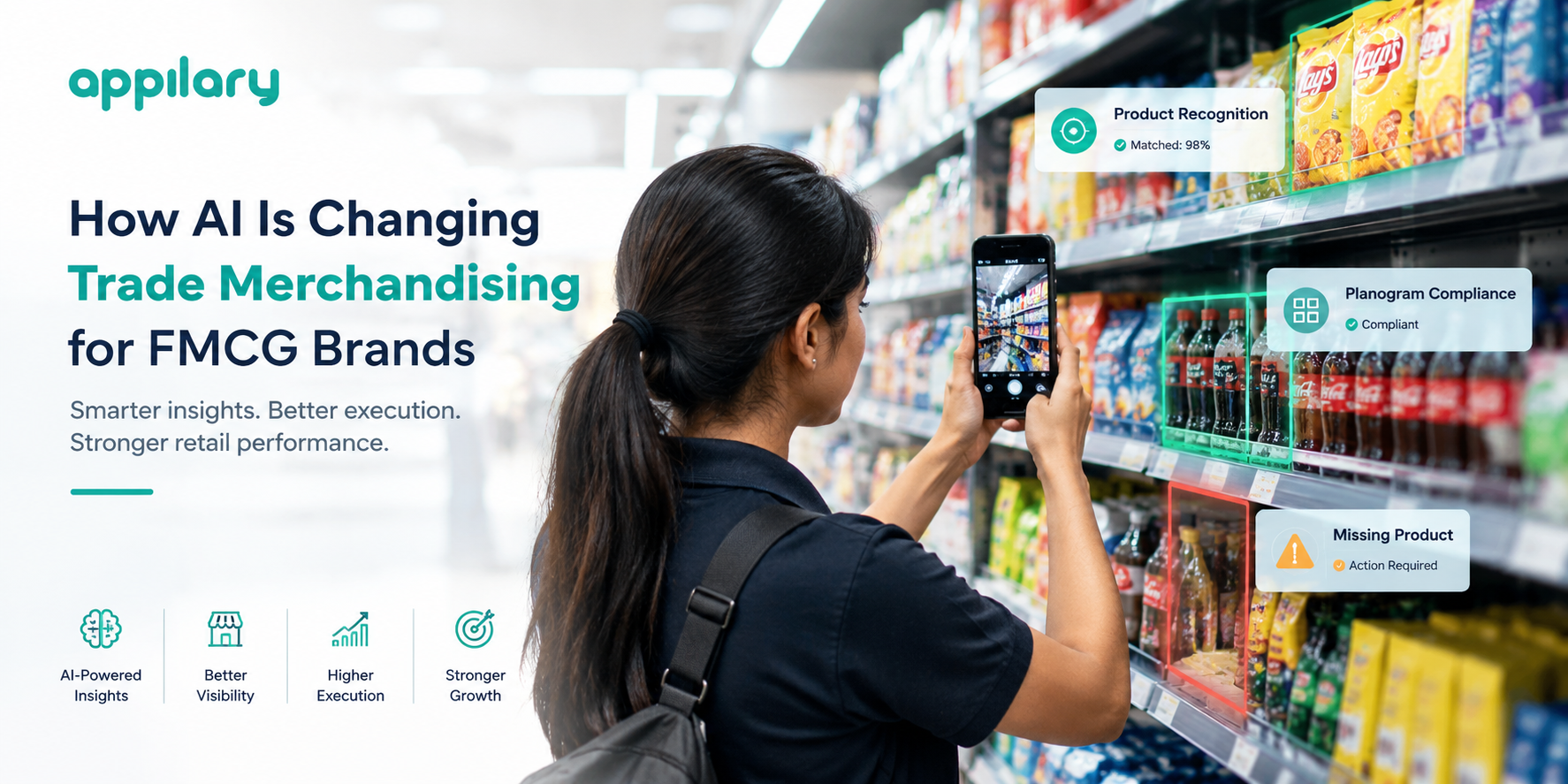
- AI-Based Image Validation
- Automatically verify whether branding materials are installed correctly.
- Field Force Tracking
- Monitor field executives, merchandisers, and promoters during store visits.
- Campaign & Task Management
- Assign branding tasks based on locations, distributors, or campaigns.
- Compliance Monitoring
- Identify stores where branding guidelines are not being followed.
- Live Store Visit Tracking
- Verify retailer visits using GPS-enabled check-ins.
- Automated Reports & Analytics
- Generate detailed reports by region, distributor, executive, campaign, or outlet.
- Instant Alerts & Notifications
- Receive alerts whenever branding materials are missing, damaged, or overdue for replacement.
- Cloud-Based Data Management
- Store all campaign records securely and access them anytime from anywhere.
Business Benefits for FMCG Companies
Implementing Retail Branding Automation Software provides measurable business outcomes beyond operational efficiency.
Brands can:
- Improve retail branding consistency
- Increase product visibility at the point of sale
- Reduce campaign execution costs
- Improve field force productivity
- Strengthen distributor accountability
- Make faster, data-driven decisions
- Enhance customer shopping experience
- Improve retailer engagement
- Increase campaign ROI
- Drive higher sales through better in-store execution
Conclusion
Retail branding is one of the most important drivers of product visibility and consumer engagement in the FMCG industry. However, relying on manual monitoring methods makes it difficult to maintain branding consistency, verify execution, and measure campaign performance across multiple retail locations.
A Retail Branding Automation Software empowers FMCG brands with real-time monitoring, GPS-enabled verification, automated reporting, and actionable insights. By digitizing retail branding operations, brands can improve compliance, eliminate manual inefficiencies, reduce operational costs, and maximize the return on every retail marketing campaign.
As competition continues to grow, investing in a Retail Branding Automation Platform is no longer a luxury—it's a strategic necessity for FMCG companies looking to deliver consistent brand experiences across every retail outlet.